
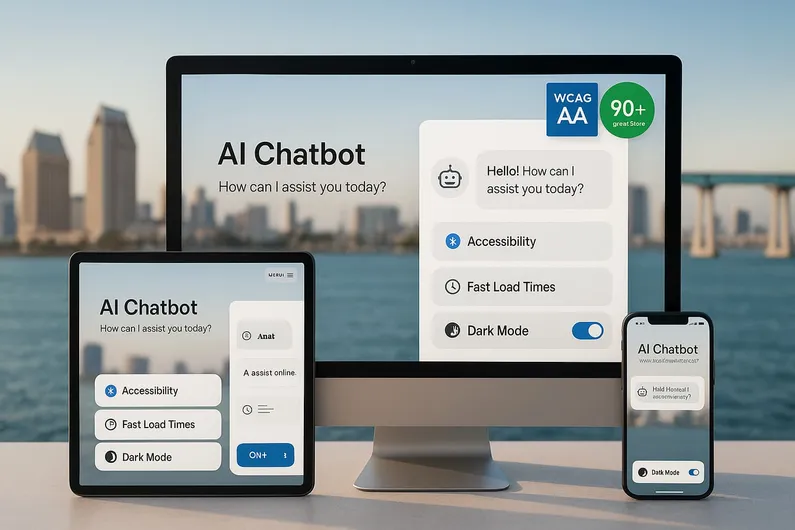
Web Design Trends 2026: Human-Centered & AI-Powered

Web Design in 2026: A Strategic Guide for San Diego Businesses
Web design in 2026 is shaped by a clear tension: AI is everywhere, yet the most effective websites feel more human, not more automated.
For San Diego businesses, this matters even more. Local competition is high, mobile usage dominates, and users expect fast, clear, trustworthy experiences. The websites that perform best are not the most complex, but the most intentional.
This guide explores the key web design trends shaping San Diego’s digital landscape and how local businesses are using them to drive growth and stay competitive. Looking for the right agency? Check our guide to San Diego’s best web design companies.
Executive Summary: What Actually Matters in 2026
Web design success in 2026 is no longer about visual novelty. It is about clarity, performance, and authenticity, supported by AI behind the scenes.
The strongest websites combine:
- Human-centered design that feels authentic and personal
- Fast, mobile-first performance
- AI used quietly to improve experience and efficiency
- Accessibility as a baseline, not an add-on
- Local relevance through SEO and content
For San Diego businesses, these principles are now table stakes.
1. Human-Centered Design Is the New Differentiator
As AI-generated websites become easier to produce, human craft becomes a competitive advantage.
Designers and businesses are intentionally moving away from overly polished, generic layouts toward styles that feel personal and expressive.
This includes:
- Hand-crafted or imperfect visual elements
- Custom illustrations or photography instead of stock images
- Clear brand voice and storytelling
- Design choices that feel intentional, not templated
For small and local businesses, this is good news. Authenticity builds trust faster than technical sophistication alone.
2. AI in 2026: Powerful, Invisible, and Purposeful
AI is no longer a visible feature on most websites. In 2026, the most effective AI works quietly in the background.
Examples include:
- Personalizing content based on user behavior
- Automating SEO tasks like meta descriptions and image alt text
- Qualifying leads or routing inquiries intelligently
- Improving accessibility and content structure
When AI is obvious, it often feels gimmicky. When it is invisible, it improves results without friction.
Visual Snapshot: Web Design Trends in 2026
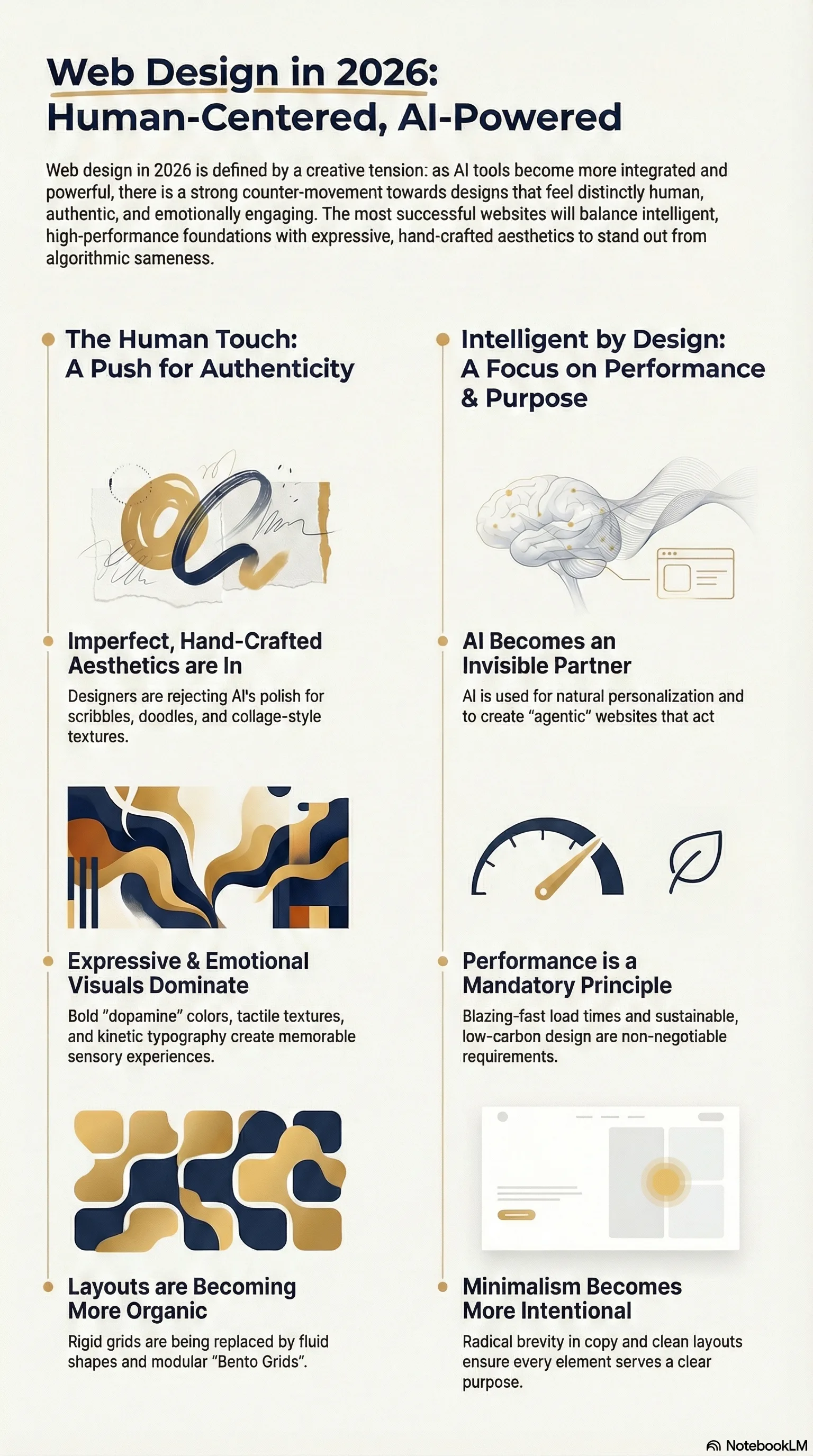
The following infographic summarizes the major design forces shaping the web in 2026, from human-centered aesthetics to performance-first thinking.
3. The Split in Visual Style: Expressive vs Intentional
Web design in 2026 does not follow a single aesthetic. Instead, it splits into two clear directions.
Expressive, Emotional Design
This approach uses bold color, expressive typography, organic shapes, and dynamic layouts to create strong emotional impact. It works well for lifestyle brands, creative businesses, and youth-focused audiences.
Calm, Intentional Minimalism
This approach prioritizes clarity, whitespace, readable typography, and structured layouts. It is especially effective for service-based businesses, consultants, and local companies where trust and usability matter most.
For San Diego businesses, the right choice depends on audience and positioning. There is no universal answer.
4. Performance Is No Longer Optional
Speed is no longer a “nice to have.” It is a requirement.
In 2026:
- Pages should load in under 3 seconds, ideally faster
- Mobile performance matters more than desktop
- Heavy animations and unnecessary scripts hurt conversions
- Low-carbon design choices improve speed and sustainability
A visually impressive site that is slow on mobile is a liability, not an asset.
5. Accessibility Is a Business Standard
Accessibility is no longer optional or niche. It is a baseline expectation.
Modern websites must:
- Use sufficient color contrast
- Support keyboard navigation
- Include meaningful alt text for images
- Use clear, semantic structure
Accessible websites perform better for everyone, not just users with disabilities.
Practical Guidance for San Diego Business Owners
What to prioritize first
- Mobile performance and page speed
- Clear messaging and calls-to-action
- Local SEO optimization
- Accessible, readable layouts
What to avoid
- Overly complex animations
- Experimental navigation patterns
- Design trends that hurt speed or clarity
Where most sites fall short
- Generic templates that look like competitors
- Slow load times despite “modern” design
- Too much text and not enough structure
Final Takeaways
- Human design builds trust in an AI-driven world.
- Speed is the foundation of modern websites.
- AI works best when users do not notice it.
- Accessibility improves usability, SEO, and credibility.
- Design trends should serve clarity, not distract from it.
Ready to implement these trends?
Contact us for a free consultation and custom strategy.
Start with our website launch checklist or explore essential features for small business websites.


